Hearthstone Streamer Sundays Weekly Discussion
Hearthstone Streamer Sundays Weekly Discussion |
- Streamer Sundays Weekly Discussion
- How to get banned in Kripps Chat
- Simple Yogg solution for aggro pally
- Literally unplayable
- I introduced my (now) wife to Hearthstone when we first dated, she then made this for our wedding!
- Kripp isn't happy about the new cards
- Obnoxious bug. Every single time I open the iOS app, I’m shown my rank from October 2016 season
- The ultimate wincondition in arena
- Picture of a Hearthstone player playing Cubelock (2018 colourized)
- Programming addiction into Hearthstone (with citations)
- Prophet Velen does not double the damage with Crackling Doom
- What happens when you play Curious Glimmerroot and they only have Neutral Cards?
- His emote tipped me off, never bm!
- 6 quest slots would be really nice
- Brode and Whalen look back at the Year of the Mammoth: "This was our best year"
- Top Cards of the Week from r/CustomHearthstone (03/17/2018)
- Nice little raptors.. for quest Rogue
- I have a love-hate relationship with the cube...
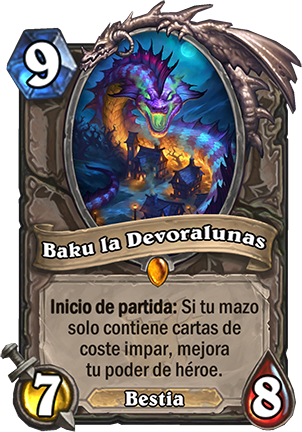
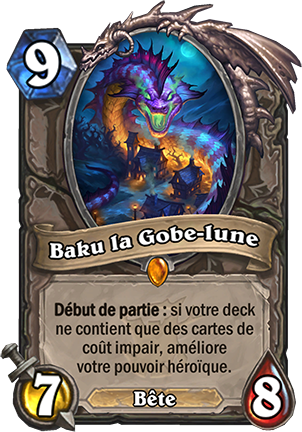
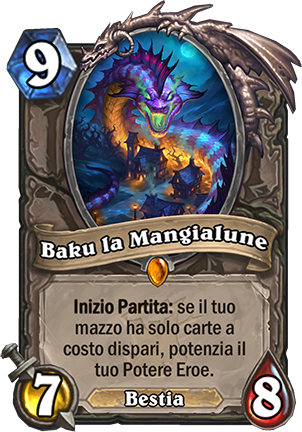
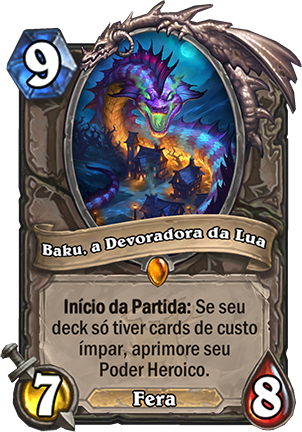
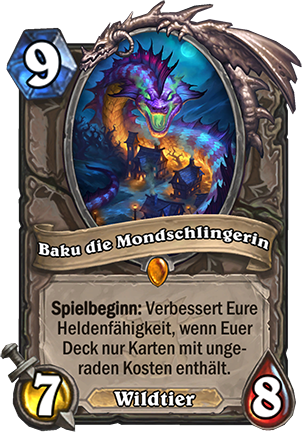
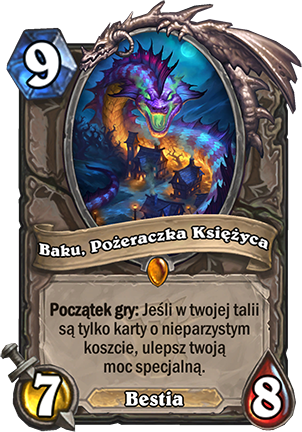
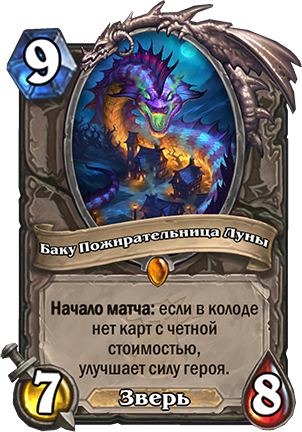
- Baku the Mooneater is a girl
- Wonder if he regrets roping to BM emote...
- Rod of Roasting value
- What a disappointing way to lose a dungeon run.
- Kripp has faith
- Scythe Of Elune. 'The key to the Worgen's imprisonment'. Would be cool to see something like this as potentially a new Weapon to fit in with the theme of the upcoming Witchwood Expansion!
- Dungeon Run & Monster Hunt : More Than Just "Another PvE Mode"
- This was cool O.O
| Streamer Sundays Weekly Discussion Posted: 17 Mar 2018 05:11 PM PDT Do you enjoy watching streamers? Do you wish there was an easier way to find new up-and-coming streamers beyond the well-known, established Twitch goliaths? Do you have a stream yourself? Are you looking to get exposure but not sure how given how Twitch displays streams and how one-shot stream promotion posts on Reddit tend to get ignored? Is anyone still reading these questions? This thread is for you! If you are a streamer or know of a cool, lesser-known (read: doesn't regularly pull in 1K+ viewers) streamer feel free to post the URL and a short, informative pitch about why you feel others would be interested to watch it. Why should someone watch your suggested stream rather than one of the hundreds of other streams out there? The next great streamer might be just one comment away. Enjoy! Note: I am a bot. Questions or feedback regarding this thread? Message the moderators. [link] [comments]  | ||
| How to get banned in Kripps Chat Posted: 17 Mar 2018 09:15 PM PDT
 | ||
| Simple Yogg solution for aggro pally Posted: 17 Mar 2018 08:33 AM PDT
 | ||
| Posted: 17 Mar 2018 04:55 PM PDT
 | ||
| I introduced my (now) wife to Hearthstone when we first dated, she then made this for our wedding! Posted: 17 Mar 2018 08:06 AM PDT
 | ||
| Kripp isn't happy about the new cards Posted: 17 Mar 2018 12:19 PM PDT
 | ||
| Obnoxious bug. Every single time I open the iOS app, I’m shown my rank from October 2016 season Posted: 17 Mar 2018 05:43 PM PDT
 | ||
| The ultimate wincondition in arena Posted: 17 Mar 2018 07:15 AM PDT
 | ||
| Picture of a Hearthstone player playing Cubelock (2018 colourized) Posted: 17 Mar 2018 12:09 AM PDT
 | ||
| Programming addiction into Hearthstone (with citations) Posted: 17 Mar 2018 01:29 PM PDT Introduction The consumption of gaming experiences that produce transient feelings of euphoria or pleasure and the development of dependence on those experiences is an extension of the neurobiological pathway of addiction. Currently, the cost of addiction to interactive mobile apps, computer games, and social media is unknown, however it is associated with profound social and economic impacts. In this report, I look at a popular online and mobile game, Hearthstone, with a 70million player base Blizzard, 2017 to understand how certain attributes of gambling-style gaming can alter specific brain systems to lead to the addicted state. Background Addiction is defined as a chronic relapsing disorder that is comprised of three stages: preoccupation/anticipation, binge/intoxication, and withdrawal/negative affect. These three stages are conceptualized as feeding into one other, becoming more intense over time, and ultimately leading to the pathological state known as addiction. Different interactive digital experiences produce distinct patterns of addiction that engage different components of the addiction cycle, depending on frequency and length of use. As an individual moves from being a "user" to "abuser" and then to "addicted" a shift occurs from positive reinforcement driving the motivated behavior to negative reinforcement driving the motivated behavior. Behavioral addictions are often preceded by feelings of "tension or arousal before committing the act" and "pleasure, gratification or relief at the time of committing the act" Vahia, 2013. Game cue-associated brain activation in gaming addicts occurs in the same brain regions (orbitofrontal, dorsolateral prefrontal, anterior cingulate, nucleus accumbens) as with drug cue-associated brain activation in drug addicts Ko et al. The progression of addiction involves alterations in normal brain circuitry that result in long-lasting neuroplastic changes Koob and Volkow, 2010. Critical neurotransmitters (i.e., gamma-aminobutyric acid, glutamate, dopamine, opioid peptides, serotonin, acetylcholine, endocannabinoids, corticotropin releasing factor) and neurocircuits (i.e., ventral tegmental area, nucleus accumbens, amygdala, cerebellum, prefrontal cortex) underlie the pathological changes at each of these stages. Designing for addiction A better understanding of the main addicting mechanisms in Hearthstone can be obtained by considering the actions of commonly used addictive programming traits within gambling, known to generate addictive behaviours. These include randomness, anticipation and drip-feeding. Randomness Randomness is a programmatic tool used by game developers to introduce uncertainty into otherwise pre-destined outcomes. Typically performed by Random Number Generators (RNG), randomness limits a system output to a variable spread over a contextually relevant range. Hearthstone contains examples of hyper-optimised randomness, a factor which is consciously pushed by it's developers B Brode, PC Gamer, 2015. Cards such as [[Lightning Storm]], [[Spiteful Summoner]] and [[Mayor Noggenfogger]] demonstrate different types of randomness, namely Low/High Randomness, Selection Randomness and Extreme Randomness respectively, with decreasing frequency of in-game play. Each form of randomness has common elements; a guaranteed in-game effect with a known Randomness Swing determined by RNG (the potential for both positive and negative effects). In general, the larger the Randomness Swing, the less frequently it is seen in play, but the higher potential reward. Low/High Randomness: Simple RNG, over a small variable range (e.g. 1-2), effects tiny changes in gameplay. The player is guaranteed to cause an in-game effect and trigger a reward loop, however the magnitude of that effect is limited by the range of Randomness Swing. Low/High randomness is for the most part only seen over small variable ranges, and is therefore accepted as being a feature of the game, uncontrollable by the player, but not significantly detrimental to any given play style. It is therefore important to note its constant presence within the game. Selection Randomness: (e.g. discard and recruit mechanics) RNG programmed to link a number variable to a large range of potential outcomes has a larger potential for higher reward, or greater magnitude of disappointment with moderate to high Randomness Swing. Players will invariably seek out methods to minimise the magnitude of the swing by attempting to ensure only positive outcomes are available. This results in a feedback loop of high reward for players who actively engage with cards utilising Selection Randomness. Opposing players can also be rewarded if Selection Randomness provides a negative outcome. Selection Randomness is also an integral part of game design, and is the main component of turn-based drawing of cards from player's decks. Extreme Randomness: RNG programmed to effect any number of in-game outcomes with high variance and Randomness Swing is seen less frequently, being only associated with a small pool of cards ([[Mayor Noggenfogger]] is perhaps the pinnacle example). Extreme Randomness has such a large Randomness Swing that players actively avoid encountering it as much as possible as it limits any feeling of control. For this reason it has been designed to be encountered infrequently. One particular card [[Yogg Saron]], infamous for its extreme Random Swing, was eventually limited by the developers in its randomness ('nerfed') after extensive complaints from the player community due to it's perceived high negative outcome rate. The entire Hearthstone experience contains all these elements of randomness, even outside of the gameplay environment. For instance, the acquisition of cards is an almost entirely random process, with players only having control of how many cards they can collect, either through gameplay, promotional events or direct purchase. The pool of cards being as large as it is means that Selection Randomness is a large factor in which cards a player receives. The game developers have attempted to limit the negative aspects of this randomness by incorporating a guarantee of 'good outcomes' by using a Pity Timer (a numerical limit of cards after which a guaranteed Legendary card is rewarded), and to remove the high negative feedback by limiting duplication of obtained Legendary cards. In this manner, the collection of cards remains a random process, with promise of infrequent but great reward. Randomness is also innate in many other aspects of the game, from automated selection of an opponent (who may be representing any of nine in-game 'classes', and be playing any configuration of cards), to drafting cards in the Arena format, to receiving daily in-game Quests (tasks the player must complete to receive in-game rewards). In addition, even the rewards are randomly generated, with differing amount of in-game currency or random cards being offered. In effect, it is impossible not to encounter randomness within Hearthstone, as it has been explicitly designed to be prevalent in all aspects of its design. Anticipation Experience of randomness alone does not lead to the neuroplastic changes required to trigger addiction. Every random event must be associated with a sense of heightened awareness, either conscious or subconscious, achieved by building uncertainty during anticipation. In this manner, the deep white matter neural tracts involved with subconscious preparation for response (insula and amygdala) are pre-triggered prior to an eventual release of ventral tegmental dopaminergic neurotransmitters and glutamate Sarinopoulos et al, 2010. In gaming, anticipation can be built using both visual and auditory stimuli, as well utilising time delays between a player action and event outcome. Fruit machines are the classic pedagogy for analysis of gaming addiction, with overt audio-visual displays, player uncertainty, anticipation, randomness and reward all playing a part in the development of addiction and dependancy Griffiths, 1993. An in-game example that has been perfected within Hearthstone to stimulate the neural pathways (as a fruit machine does) is the pack opening experience. Rather than just adding cards to a list, players are presented with an interactive 'life-like' pack of cards they must place on a central podium in order to open. This focusses the player's attention on the incoming reward loop. An animation then plays, with both grandiose audio and visual queues, before cards are displayed facing away from the player. This sequence is specifically designed to heighten uncertainty during the anticipatory phase, prior to an expected dopamine-releasing reward, which in itself is of unknown Randomness Swing. The player must then further interact (focus), clicking each card in turn, each click additionally heightening uncertainty. The final outcome is then displayed, with potential for high reward feedback with every click. Anticipation is also a key addictive element during combative gameplay. Every action a player makes is followed by a time delay taken up by an animation. Combined with uncertainty of RNG-derived outcomes, each and every move a player makes is strengthening neuronal pathways involved in anticipation. In this manner, the game developers have built loops of neuronal preparation via uncertainty and anticipation, followed by dopaminergic feedback variated through RNG-derived outcomes. Over time, this leads to addictive behaviours, as the neural paths become heightened to the triggers that developed them. Drip Feeding A constant barrage of rewards can lead to hypersensitivity of recipients, and therefore addiction Bechara et al 2002. Therefore, in gaming and gambling, small rewards are designed to be given at regular time intervals, and larger rewards at longer more infrequent intervals. In itself, this design encompasses and heightens anticipation, driving user familiarity and formation of neural reward loops. Hearthstone encapsulates this dogma by incorporating a drip-feeding mechanism of increasing value of rewards over extended lengths of gameplay. Players receive small in-game rewards for performing short tasks (e.g. 10 Gold for winning 3 games, one pack for winning a Tavern brawl), moderate in-game rewards for lengthier tasks (e.g. completing a quest, gaining a rank in laddered combative play), and infrequent large rewards (reaching the highest rank of Legend, 12 wins in Arena mode, opening a Legendary card). Importantly, the larger the reward, the longer the player must spend in game, and the more anticipation and randomness they must experience, further reinforcing the neuroplastic changes that ultimately lead to gaming addiction. Tolerance and Withdrawal The mechanisms described above not only lead to gaming addiction, but also tolerance. Gamblers are known to become tolerant to risk, taking more extreme decisions and actions the more addicted they become. The converse of this paradigm is that the 'lows' experienced as a result of perceived low reward value can result in changes in mood, leading to chronic depression or aggression. In Hearthstone, this is known in the community as 'saltiness' or 'burn out'. Experienced players often report feelings of despair or anger, presumably as their strengthened neurobiological pathways are no longer triggered by low reward outcomes. The developers, aware of the detrimental impact of tolerance, have implicitly designed around this by ensuring regular updates of in-game content and gameplay mechanics in the format of expansions and increased card pool size. Withdrawal from an addictive game can also lead to deleterious neuropsychiatric changes. It has been shown that pathological gamblers experienced similar levels of withdrawal symptom severity as alcohol-dependent participants Blazczynski et al, 2008. The socio-economic and psychological effects of withdrawal from Hearthstone are not known, and therefore unquantifiable, however, there is some evidence to suggest that players often struggle with withdrawal, compensating by no longer actively playing the game, but by constantly checking in on the game by engaging with online streamers and discussion communities. Conclusion The developers of Hearthstone have deliberately incorporated many of the known neurobiologically addictive features of gambling into the game, not only to encourage addiction, but to ensure ongoing revenue streams from addicted players. As a result of intentional and implicit addictive programming, players undergo constant drip-fed reward-loops, heightened by anticipatory time delays with audio-visual queues, reinforced by uncertainty derived from the randomness of both in-and-out-of-play events and reward magnitude. This may explain the game's popularity, but also the community's perceived aggression towards the developers and player status as one of the internet's most disruptive gaming communities Motherboard, 2018. [link] [comments]  | ||
| Prophet Velen does not double the damage with Crackling Doom Posted: 17 Mar 2018 01:02 PM PDT
 | ||
| What happens when you play Curious Glimmerroot and they only have Neutral Cards? Posted: 17 Mar 2018 07:51 PM PDT [[Curious Glimmerroot]] is hard coded to select only class cards from the opponents deck. So what happens if there are no class cards in your opponents deck? Well I tested the interaction with these results. In the first screenshot, the opponents deck had only neutral minions, so only neutral minions were offered as options. In the second screenshot, there was only a single class card in my opponents deck, being the quest- which was offered along other warrior class cards. This confirms that Glimmerroot will always select a class card from your deck, regardless of the ridiculous proportion of neutral to class cards. Studying this interaction also inspired me to make this card [link] [comments]  | ||
| His emote tipped me off, never bm! Posted: 17 Mar 2018 05:35 AM PDT
 | ||
| 6 quest slots would be really nice Posted: 17 Mar 2018 12:27 AM PDT I'm sure this has been said before but I typically only have time to play on the weekends, and I play more than enough games to hit 6. As someone that is buying every preorder and a couple 40-60 /expansion I feel like this is not an unreasonable ask. I like to buy some of that with gold (and google surveys) but I really feel like I'm missing out on a ton of opportunity without being forced to do quests so frequently. [link] [comments]  | ||
| Brode and Whalen look back at the Year of the Mammoth: "This was our best year" Posted: 17 Mar 2018 12:17 PM PDT
 | ||
| Top Cards of the Week from r/CustomHearthstone (03/17/2018) Posted: 17 Mar 2018 08:38 AM PDT Hear ye, hear ye. I've come from r/CustomHearthstone with some exciting news! Just last week, the subreddit hit a big milestone of fourty thousand subscribers! (We're coming to catch you r/hearthstone, better watch your back!) And all 40,000 of us are super excited about the upcoming Witchwood expansion. There's been so many Witchwood-inspired cards made and we're also doing a big event themed around it to celebrate our 40,000 subscriber milestone: The War for the Witchwood. Briefly described, it is a big turf war event where everyone on the subreddit is being divided into teams. The teams will be competing against each other in various design challenges over the next couple of weeks for control over the Witchwood (and the subreddit). We welcome all of you to join in on the fun, and you can learn more about it in this post. Also to whomever asked me about consolidating all the top cards of the weeks together in a handy place, I've just realized that I kinda already did that. You can go to this imgur page to find most of the past threads. [link] [comments]  | ||
| Nice little raptors.. for quest Rogue Posted: 17 Mar 2018 08:01 AM PDT
 | ||
| I have a love-hate relationship with the cube... Posted: 17 Mar 2018 10:02 AM PDT
 | ||
| Posted: 17 Mar 2018 05:40 AM PDT For those who only play the English version of the game, in case you were wondering. Languages that show gender have translated Baku as female. My knowledge of all those languages is limited, so correct me if I'm wrong, but here's a summary:
I don't read any Asian languages, but someone who does could probably confirm. So yeah. Just a random fun fact :D [link] [comments]  | ||
| Wonder if he regrets roping to BM emote... Posted: 17 Mar 2018 05:13 AM PDT
 | ||
| Posted: 17 Mar 2018 02:14 AM PDT
 | ||
| What a disappointing way to lose a dungeon run. Posted: 17 Mar 2018 01:04 PM PDT
 | ||
| Posted: 18 Mar 2018 12:07 AM PDT
 | ||
| Posted: 17 Mar 2018 04:44 AM PDT
 | ||
| Dungeon Run & Monster Hunt : More Than Just "Another PvE Mode" Posted: 17 Mar 2018 02:03 AM PDT Dungeons Runs were a great addition to the Solo Play portion of Hearthstone that provided a much diverse PvE experience than to the ones we were used to. I have no doubt that Monster Hunt will provide a similar experience come The Witchwood expansion's release, and I will personally indulge in countless hours exchanging beat downs with the AI. However, the main problem of Dungeon Runs (And I presume it will be one of Monster Hunt's) is that after you have played through it and earned all the rewards possible, the incentive to play more drops significantly and it becomes just another play mode that you only touch every time you get the Defeat 5 Dungeon Run Bosses quest. (Of course, that varies from one player to the other) I know Dungeon Run and Monster Hunt are not modes that were designed to be more than a fun and casual PvE experience that you play whenever you are disinterested in playing Ranked, Arena and Tavern Brawl. Do note that:
What I DO propose is the following: Weekly Challenges Much like the Tavern Brawl, we can have a mode that utilities Dungeon Runs/ Monster Hunt that is also weekly and can fill the gap between the end of a Tavern Brawl till the start of the next one Games like Slay The Spire and The Binding of Isaac provide daily challenges that are comprised of pre-tailored set of rules, items, enemies, cards etc. that aim to test the player's skills and pit the player base against each other to see who scores the highest in the leader boards (Usual top scores are abnormal anyway due to cheating) We can do the same with Dungeon Run and Monster, where the players will play identical runs with pre-made decks and power ups (A Seed) with certain handicaps (E.G. start with a high health pool, health does not reset back to full between bosses) Each week will have a different reward - Regular rewards such as:
Special rewards provided with even more difficult runs, such as:
1-Common : Defeat 1 Boss 2-Rare : Defeat 3 Bosses 3-Epic: Defeat 6 Bosses 4- Legendary: Defeat ALL bosses Due to the nature of the run, players may only be allowed a single entry. Did good? get rewarded Did bad? tough luck Some players might miss out on the other special rewards and therefore will definitely be agitated (Couldn't play a month during September 2016, only monthly cardback I've missed - Still upset about it) Thus, in those cases Blizzard can allow multiple runs or provide the chance to receive the same rewards in subsequent runs (With compensations to those that have already received them) But in cases of regular rewards, those should be limited to a set number of entries for purposes of making it more challenging. TL;DR recap: 1- Dungeon Run and Monster Hunt are fun modes, but become stale 2- Weekly challenges involving these modes in pre-tailored runs to increase incentive 3- Cool rewards Thank you for reading [link] [comments]  | ||
| Posted: 17 Mar 2018 04:55 AM PDT
 |


| You are subscribed to email updates from Hearthstone. To stop receiving these emails, you may unsubscribe now. | Email delivery powered by Google |
| Google, 1600 Amphitheatre Parkway, Mountain View, CA 94043, United States | |


![[link]](https://i.redd.it/jhq8w73recm01.png)
![[link]](https://i.redd.it/8o0f6v9cwem01.png)
![[link]](https://i.imgur.com/37ddlRt.jpg)
![[link]](https://i.imgur.com/vxIol8l.jpg)
![[link]](https://i.redd.it/dl4925xw0cm01.png)
![[link]](https://i.redd.it/v1yr8ykpw9m01.png)
![[link]](https://i.gyazo.com/d343aabe869095191a9db3775d38bbe6.jpg)
![[link]](https://i.redd.it/5phd7bh39cm01.jpg)
![[link]](https://i.redd.it/9gl4pmmpebm01.png)
![[link]](https://i.redd.it/ub970lu7jam01.png)
![[link]](https://i.redd.it/hylim9ft9bm01.jpg)
![[link]](https://i.redd.it/f4l4tyzwbbm01.jpg)
Comments
Post a Comment